
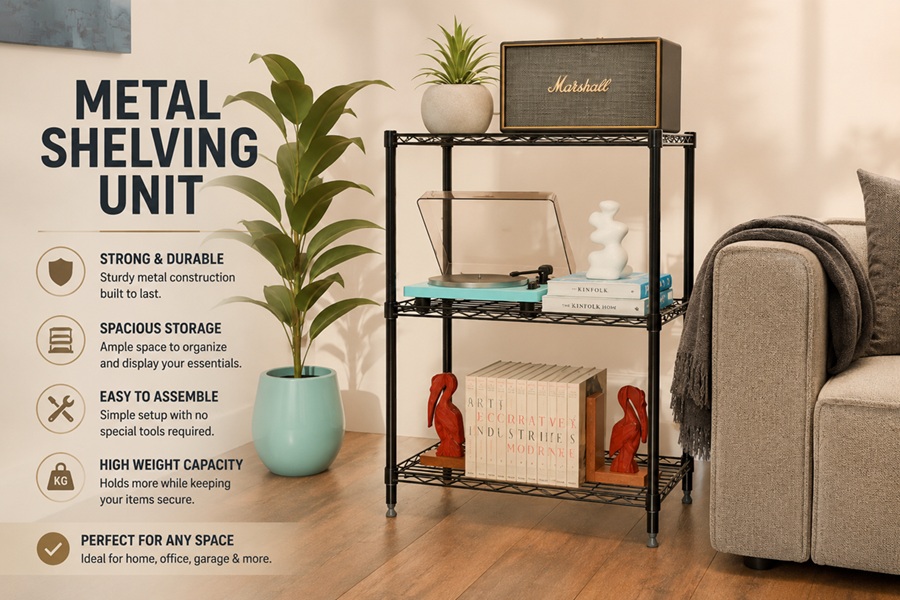
A metal shelving unit is a freestanding storage rack made of metal, prized for being strong, durable, and adjustable, making it ideal for garages, pantries, closets, laundry rooms, and utility spaces where you need to store heavy or bulky items. The main types include wire shelving, solid steel shelving, and boltless or rivet shelving, and the right one depends on what you plan to store and where. Because metal units hold far more weight than most other shelving and resist moisture and wear, they are the go-to choice for organizing hardworking spaces that need to carry a real load.
When you need serious, no-nonsense storage, few options beat a metal shelving unit. It stands up to heavy tools, bulk supplies, and years of use without sagging or breaking, and adjustable shelves let you configure it to fit whatever you own. This guide covers the main types of metal shelving, their common uses, the benefits, how much weight they hold, and how to choose and set up the right unit for your space.
| What it is | A freestanding metal storage rack |
| Key strengths | Strong, durable, and adjustable |
| Main types | Wire, solid steel, and boltless/rivet |
| Best for | Garages, pantries, closets, and utility rooms |
| Weight capacity | High, well suited to heavy items |
| Adjustability | Shelves usually reposition to fit your needs |
| Resistance | Handles moisture and wear better than wood |
| Assembly | Many boltless units need no tools |
Why Choose a Metal Shelving Unit
Metal shelving earns its popularity through sheer capability. Compared with wood or plastic shelving, a metal unit is far stronger and can hold significantly more weight, which matters when you are storing tools, boxes, bulk goods, or equipment. It also resists moisture, warping, and pests better than wood, so it holds up in damp or demanding spaces like garages and basements where other shelving would degrade.
Just as valuable is adjustability. Most metal shelving units let you reposition the shelves to different heights, so you can configure the unit around tall bottles, bulky bins, or short items as your needs change. Add durability that lasts for years and straightforward assembly, and a metal shelving unit becomes a versatile, long-term storage workhorse that adapts to almost any space.
The Main Types of Metal Shelving
Metal shelving comes in a few distinct styles, each suited to different storage needs and settings. Knowing the differences helps you pick the right one.
| Type | Character | Best For |
| Wire shelving | Ventilated, lighter, often chrome | Pantries, closets, airflow |
| Solid steel | Heavy-duty, strong flat shelves | Garages, tools, heavy loads |
| Boltless / rivet | Tool-free assembly, very sturdy | Utility and storage rooms |
| Wall-mounted metal | Fixed to the wall, saves floor | Smaller or open spaces |
Common Uses Around the Home
The versatility of metal shelving means it earns a place in many parts of the home, wherever sturdy, flexible storage is needed. It shines in hardworking, utility-focused spaces.
- Garages, for tools, hardware, bins, and equipment
- Pantries, where ventilated wire shelving suits food storage
- Closets, adding adjustable, sturdy storage
- Laundry rooms, holding supplies and baskets
- Basements and utility rooms, resisting damp better than wood
- Workshops and sheds, carrying heavy tools and materials
Understanding Weight Capacity
One of the biggest reasons to choose metal is its strength, so weight capacity is a key spec to understand. Metal shelving units are rated for how much weight each shelf and the whole unit can safely hold, and these ratings vary widely, from lighter-duty wire units to heavy-duty steel racks built for serious loads. When storing heavy items like tools, canned goods, or equipment, check the per-shelf rating and choose a unit that comfortably exceeds what you plan to store. Distributing weight evenly and not overloading any single shelf keeps the unit stable and safe for the long haul.
Benefits at a Glance
Pulling it together, a metal shelving unit offers a compelling combination of qualities that explain why it is such a popular storage choice.
- High strength and weight capacity for heavy or bulky items
- Durability that lasts for years without sagging or breaking
- Resistance to moisture, warping, and pests
- Adjustable shelves that adapt to different items
- Straightforward, often tool-free assembly with boltless designs
- Good value for the storage and longevity you get
How to Choose the Right Unit
Selecting the best metal shelving unit comes down to matching it to your space, load, and use. Start with the dimensions: measure your space and choose a unit that fits the height, width, and depth available. Consider the weight you will store and pick a duty rating that comfortably handles it, going heavy-duty steel for garages and tools, or ventilated wire for a pantry. Decide whether you want a freestanding or wall-mounted unit, and look for adjustable shelves for flexibility. For easy setup, boltless designs assemble without tools. Matching these factors to your needs ensures the unit serves you well for years.
- Measure your space to get the right size
- Match the weight rating to what you will store
- Choose wire for airflow, solid steel for heavy loads
- Look for adjustable shelves for flexibility
- Consider boltless designs for tool-free assembly
Setting It Up Safely
Once you have your unit, a few steps keep it stable and safe. Assemble it fully according to the instructions on a level surface, making sure all connections are secure. Place it where the floor is even so it does not wobble, and for tall units, especially in earthquake-prone areas or homes with children, anchoring the unit to the wall prevents tipping. Load heavier items on the lower shelves to keep the center of gravity low, and distribute weight evenly rather than overloading one shelf. These simple precautions ensure your metal shelving stays solid and safe under a full load.
Frequently Asked Questions
What is a metal shelving unit best for?
It is best for storing heavy or bulky items in hardworking spaces like garages, pantries, closets, laundry rooms, and basements. Its strength, durability, and resistance to moisture make it ideal where wood or plastic shelving would sag or degrade.
How much weight can metal shelving hold?
It varies widely by type, from lighter wire units to heavy-duty steel racks built for serious loads. Check the per-shelf and total weight ratings, choose a unit that exceeds your needs, and distribute weight evenly to keep it stable.
What type of metal shelving is best?
It depends on your use. Wire shelving suits pantries and closets needing airflow, solid steel handles heavy garage loads, and boltless units assemble without tools for utility spaces. Match the type to what and where you are storing.
Are metal shelving units easy to assemble?
Often yes, especially boltless or rivet designs that snap together without tools. Others use simple bolts. Assemble on a level surface, secure all connections, and anchor tall units to the wall for safety.
Metal vs Other Shelving Materials
It helps to see how metal shelving compares with the main alternatives, wood and plastic, so you can be confident it is the right choice for your needs. Each material has its place, but metal stands out for hardworking storage.
Compared with wood, metal generally holds more weight, resists moisture and pests, and will not warp or rot in damp spaces like garages and basements, though wood can look warmer and more decorative in living areas. Compared with plastic, metal is far stronger and more durable, handling heavy loads that would flex or crack plastic shelving, while plastic is lighter and cheaper for very light-duty use. For serious storage of tools, bulk goods, and equipment, metal’s strength and longevity make it the clear winner.
This is why metal shelving dominates in garages, workshops, pantries, and utility rooms, where capacity and durability matter more than looks. If your priority is holding a real load reliably for years in a demanding environment, a metal unit is almost always the right call over wood or plastic.
- Metal holds more weight than wood or plastic
- Metal resists moisture, warping, and pests
- Wood looks warmer but is less durable in damp spaces
- Plastic is cheap and light but flexes under heavy loads
- Metal wins for heavy-duty, long-term storage
Final Thoughts
A metal shelving unit is one of the most practical, durable storage solutions you can add to a home, delivering the strength, adjustability, and moisture resistance that hardworking spaces demand. Choose the type that fits your needs, wire for airflow, solid steel for heavy loads, or boltless for easy setup, size it to your space, and match the weight rating to what you will store. Set it up on level ground, anchor tall units, and load it sensibly, and a metal shelving unit will keep your garage, pantry, or utility room organized and clutter-free for many years.
