
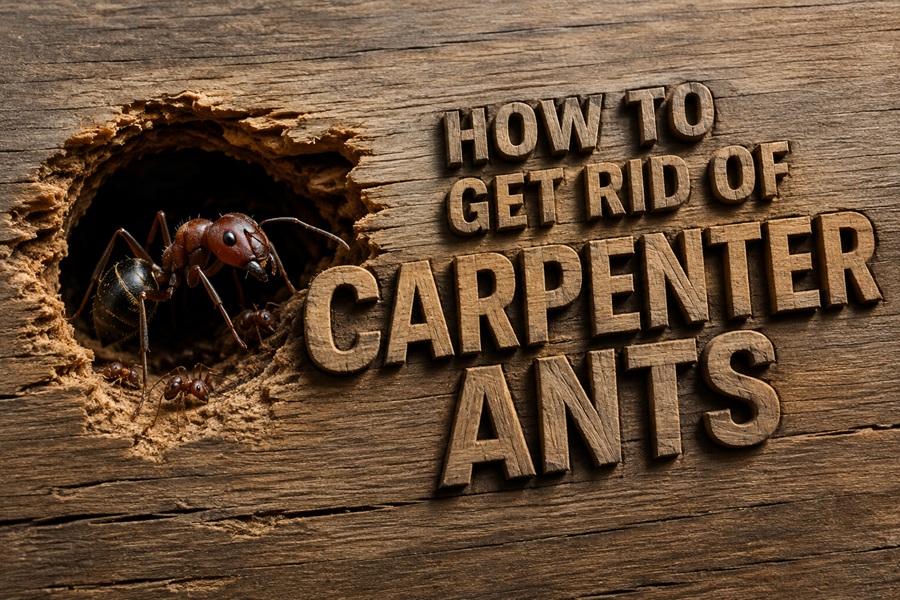
Carpenter ants are not just annoying insects crawling across your kitchen counter. They can be a warning sign of moisture problems, damaged wood, or a hidden nest somewhere in or near your home. While they do not eat wood like termites, they do tunnel through it to build their nests. Over time, this can weaken wood and lead to costly repairs if the problem is ignored.
The key to getting rid of carpenter ants is simple: you must target the colony, not just the ants you see. Spraying a few visible ants may give temporary relief, but it will not solve the real problem if the nest is still active. A better approach is to locate where they are coming from, use the right bait, fix moisture issues, remove damaged wood, and call a professional when the infestation is serious.
This guide explains how to get rid of carpenter ants properly and how to help keep them from coming back.
What Are Carpenter Ants?
Carpenter ants are large ants that nest in wood. They are often black, but some species may be reddish, brown, or a combination of colors. Their size can vary, but they are usually larger than common household ants.
The biggest misunderstanding about carpenter ants is that they eat wood. They do not. Instead, they chew through wood to create smooth tunnels, called galleries, where the colony can live. As they expand those tunnels, they push out small piles of wood shavings, which can sometimes be seen near baseboards, windows, doors, or other wooden areas.
Carpenter ants prefer damp, softened, or decaying wood because it is easier to excavate. That is why they are often found near leaks, poorly ventilated spaces, roof damage, wet window frames, crawl spaces, decks, and areas with rotting wood.
Signs You May Have Carpenter Ants
Seeing one or two ants does not always mean you have a major infestation, but repeated activity should be taken seriously. Carpenter ants often forage at night, so you may notice them more after dark.
Common signs include:
- Large black or dark-colored ants indoors
- Ant trails around walls, windows, doors, or baseboards
- Small piles of sawdust-like material called frass
- Rustling sounds inside walls, especially at night
- Ants near damp or damaged wood
- Winged ants indoors, especially in spring or summer
- Recurring ants even after cleaning or spraying
If you see winged carpenter ants inside your home, it can mean there is a mature colony nearby. This is a strong reason to inspect further or contact a pest control professional.
Step 1: Confirm They Are Carpenter Ants
Before starting treatment, make sure you are dealing with carpenter ants and not termites or another ant species. Carpenter ants have a narrow waist, bent antennae, and visible body segments. Termites have straighter bodies, straight antennae, and are usually lighter in color.
This distinction matters because carpenter ants and termites require different treatment methods. If you are unsure, take a clear photo or collect a sample in a sealed bag and ask a pest control expert for identification.
Step 2: Follow the Ant Trails
To get rid of carpenter ants, you need to figure out where they are traveling and, if possible, where the nest is located. Carpenter ants often move between food sources and their nest in organized trails.
Watch where they go, especially at night. Use a flashlight and check:
- Baseboards
- Window frames
- Door frames
- Kitchen and bathroom areas
- Around plumbing lines
- Attics and crawl spaces
- Exterior walls and foundations
- Trees, stumps, decks, and woodpiles near the home
Carpenter ants may have a main colony outdoors and smaller satellite colonies indoors. This is one reason they can be difficult to eliminate without careful inspection.
Step 3: Use Slow-Acting Ant Baits
Bait is often more effective than simply spraying visible ants. The goal is to let worker ants carry the bait back to the colony, where it can be shared with other ants.
Use a bait labeled for carpenter ants and follow the instructions on the product label. Place bait near active trails, but avoid disturbing the ants too much. You want them to keep foraging so they take the bait back to the nest.
Do not spray insecticide directly on or near bait stations. Sprays can repel or kill worker ants before they carry the bait back, making the treatment less effective.
Baiting takes patience. You may see ants continue to visit the bait for a while before activity begins to drop. That is normal.
Step 4: Avoid Relying Only on Sprays
Sprays may kill ants on contact, but they usually do not reach the hidden colony. In some cases, sprays can scatter ants and make them move deeper into walls or other areas.
That does not mean sprays are never useful, but they should not be your only method. Carpenter ant control works best when treatment is focused on the nest and colony. Baits, inspection, moisture repair, and professional treatment are usually more effective than random spraying.
If you use any ant control product, read and follow the label carefully. Use only products approved for the area where you are applying them.
Step 5: Fix Moisture Problems
Moisture is one of the biggest reasons carpenter ants choose a location. If you remove the ants but leave damp wood behind, the problem can return.
Look for and repair moisture sources such as:
- Leaky pipes
- Roof leaks
- Poorly sealed windows
- Damp crawl spaces
- Clogged gutters
- Poor drainage around the foundation
- Condensation in bathrooms or basements
- Water-damaged siding or trim
Improving ventilation can also help in damp areas such as attics, basements, and crawl spaces. Carpenter ants are much less likely to settle in dry, solid wood.
Step 6: Remove or Repair Damaged Wood
Because carpenter ants prefer softened or decaying wood, damaged wood should be repaired or replaced whenever possible. This is especially important around windows, doors, decks, porches, rooflines, and areas near plumbing.
Check for wood that feels soft, crumbles easily, or shows signs of rot. If the wood is part of a structural area, do not ignore it. Damage may need to be assessed by a contractor or pest control professional.
Removing rotting stumps, old lumber, and wood debris from around your property can also reduce nesting sites near the home.
Step 7: Seal Entry Points
Once carpenter ants are controlled, sealing entry points can help keep them out. Ants can enter through very small gaps, especially around utility lines, windows, doors, vents, and foundation cracks.
Helpful steps include:
- Caulking gaps around windows and doors
- Sealing cracks in the foundation
- Repairing damaged screens
- Closing gaps around pipes and wires
- Installing door sweeps
- Trimming branches away from the roof and siding
Branches that touch the house can act like bridges for ants. Keeping vegetation trimmed makes it harder for them to access your home.
When to Call a Professional
Carpenter ants can be difficult to eliminate because the nest is often hidden inside walls, insulation, crawl spaces, attics, or outdoor wood. If the infestation is small and you catch it early, DIY baiting and repairs may work. But in many cases, professional help is the smarter option.
Call a professional if:
- You see carpenter ants regularly indoors
- You find winged ants inside the home
- You notice sawdust-like debris near wood
- You hear rustling sounds inside walls
- You cannot locate the nest
- Ant activity continues after baiting
- You suspect structural wood damage
- The infestation appears to be large or spreading
A pest control professional can inspect the property, locate nesting areas, apply targeted treatments, and help identify conditions that are attracting the ants. If structural damage is suspected, you may also need a contractor to assess and repair the wood.
How to Prevent Carpenter Ants From Coming Back
Prevention mostly comes down to keeping your home dry, sealed, and free of decaying wood.
To reduce the risk of future carpenter ant problems:
- Fix leaks as soon as you notice them
- Keep gutters clean and working properly
- Direct water away from the foundation
- Replace rotting or water-damaged wood
- Store firewood away from the house and off the ground
- Remove dead stumps, branches, and wood debris
- Trim trees and shrubs away from the home
- Seal cracks and gaps where ants may enter
- Keep kitchens clean and food sealed
Regular inspections are also helpful. Check damp or hidden areas a few times a year, especially after heavy rain or plumbing issues.
Frequently Asked Questions
How do I get rid of carpenter ants?
The best way to get rid of carpenter ants is to target the colony. Use slow-acting carpenter ant bait, follow ant trails to locate nesting areas, fix moisture problems, and repair damaged wood. For serious infestations, call a professional.
Do carpenter ants eat wood?
No. Carpenter ants do not eat wood. They chew through it to create tunnels for nesting. Even though they do not consume wood, their tunneling can still cause damage over time.
Why do carpenter ants keep coming back?
They may keep returning because the colony was not eliminated, moisture problems were not fixed, or damaged wood remains in or around the home. Treating the ants without correcting the conditions that attract them often leads to repeat problems.
Are carpenter ants as bad as termites?
Carpenter ants and termites are different. Termites eat wood, while carpenter ants excavate it. Both can damage homes, but the treatment methods are not the same. Proper identification is important.
When should I call pest control for carpenter ants?
Call pest control if you see frequent indoor activity, winged ants, sawdust-like debris, or signs of wood damage. You should also call if DIY methods do not work or if you suspect the nest is inside a wall or structural area.
Final Thoughts
Getting rid of carpenter ants takes more than killing the ants you can see. The real goal is to eliminate the colony and remove the conditions that attracted them in the first place.
Start by confirming the pest, watching where ants travel, and using slow-acting bait near active trails. Then fix leaks, improve drainage, repair damaged wood, and seal entry points. These steps work together to solve the problem instead of just reducing it temporarily.
If the infestation is large, persistent, or connected to structural wood, professional pest control is the safest and most reliable choice. Acting early can protect your home and prevent carpenter ants from causing more damage over time.
