
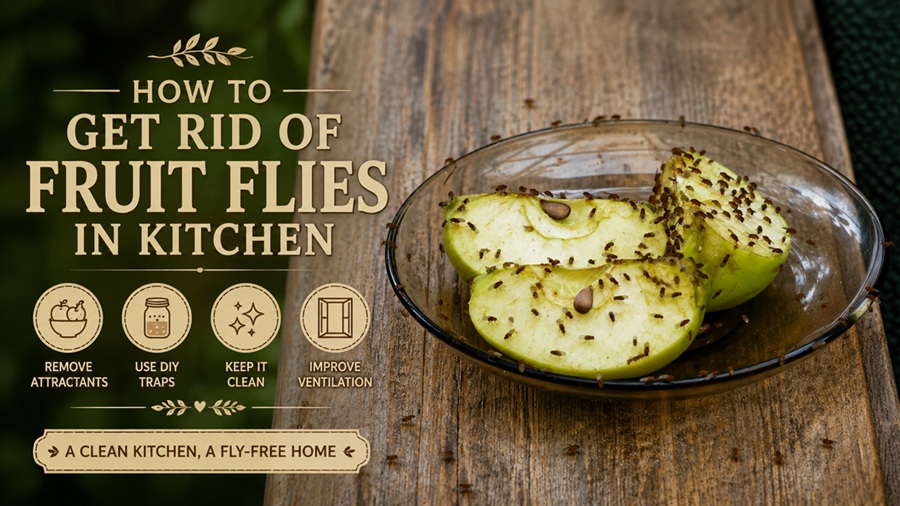
To get rid of fruit flies in your kitchen, you need to remove what attracts and breeds them, ripe or rotting produce, spills, and damp organic matter in drains and bins, and then trap the adult flies, most effectively with a simple apple cider vinegar trap. The key insight is that killing the visible flies alone will not solve the problem, because fruit flies breed rapidly in fermenting food and moist debris, so you must eliminate their food and breeding sources to break the cycle. Combine thorough cleaning and removal of attractants with a vinegar trap to catch the adults, and keep up prevention, and you can clear a fruit fly infestation and keep them from returning.
Fruit flies seem to appear from nowhere and multiply alarmingly fast, turning a few flies around the fruit bowl into a swarming nuisance within days. The good news is they are very beatable once you understand what draws them and tackle both the source and the adults. This guide explains how to get rid of fruit flies in your kitchen, from removing their attractants to setting simple traps, and how to prevent them from coming back.
| What attracts them | Ripe or rotting produce and fermenting matter |
| They breed in | Moist organic debris, drains, and bins |
| Key to success | Remove food and breeding sources |
| Best trap | An apple cider vinegar trap |
| Why traps alone fail | You must also remove what they breed in |
| Clean | Spills, drains, bins, and surfaces |
| Prevention | Store produce well and keep the kitchen clean |
| Result | A cleared, fruit-fly-free kitchen |
Why Fruit Flies Appear
Understanding why fruit flies show up is the key to getting rid of them, because they are drawn to and breed in specific things. Fruit flies are attracted to ripe, overripe, and rotting fruit and vegetables, as well as fermenting substances and moist organic matter. That bowl of ripening bananas, a forgotten potato, spilled juice, or residue in a drain or trash bin is exactly what draws them in and gives them a place to lay eggs.
Crucially, fruit flies reproduce very quickly, laying eggs in fermenting food and damp organic debris, so a small problem escalates fast. This is why you cannot solve an infestation just by swatting or trapping the adults you see, since more are constantly hatching from the breeding sites. The only way to truly get rid of them is to remove the food and breeding sources while also dealing with the adult flies, breaking their rapid reproductive cycle.
Step 1: Remove the Attractants
The essential first step is to eliminate everything that attracts and feeds fruit flies, since without their food sources they cannot survive or breed. Go through your kitchen and remove or address these temptations.
- Throw out or refrigerate ripe, overripe, and rotting fruits and vegetables
- Do not leave produce sitting out where flies can reach and breed on it
- Clean up any spills, juice, or food residue on counters and floors
- Take out the trash and recycling, and clean the bins that hold residue
- Remove and clean anything with fermenting or sugary residue, like bottles
- Wipe down surfaces to remove the food traces flies feed on
Step 2: Clean the Hidden Breeding Spots
Fruit flies often breed in places you might not think to look, especially moist spots with organic buildup, so cleaning these hidden sources is essential to stopping the cycle. Drains are a classic breeding site, since the damp organic film inside them is perfect for fruit flies, so cleaning your drains can be a key step. Also check and clean areas like the bottom of trash cans and recycling bins, under appliances, garbage disposals, damp sponges and cloths, and any spot where moist food debris collects. These overlooked, damp, food-rich spots are often where the flies are actually reproducing, so cleaning them removes the source that keeps producing new flies even after you have cleared the countertops.
Step 3: Trap the Adult Flies
Once you have removed the attractants and cleaned the breeding spots, trapping the remaining adult flies clears out the visible nuisance. The classic and highly effective method is an apple cider vinegar trap, which exploits the flies’ attraction to fermented smells.
- Pour a little apple cider vinegar into a container or cup.
- Add a drop of dish soap, which breaks the surface tension so flies sink.
- Optionally cover with plastic wrap and poke small holes for flies to enter.
- Place the trap where you have seen the most fruit flies.
- The flies are drawn to the vinegar and get trapped; refresh as needed.
The vinegar smell lures the fruit flies in, and the dish soap ensures they cannot escape. Setting up one or more of these simple traps catches the adult flies while your cleaning prevents new ones from breeding, a powerful combination.
Preventing Fruit Flies From Returning
Once you have cleared the fruit flies, prevention keeps them from coming back, and it comes down to denying them the food and breeding conditions they need. Good habits make your kitchen unattractive to fruit flies going forward.
- Store ripe produce in the refrigerator rather than leaving it out
- Use fruit and vegetables before they overripen, and discard spoiled items promptly
- Take out the trash regularly and keep bins clean
- Clean up spills and food residue quickly
- Keep drains clean and free of organic buildup
- Rinse recyclables like bottles and cans before storing them
Frequently Asked Questions
What is the fastest way to get rid of fruit flies?
Remove their food and breeding sources, ripe produce, spills, and drain buildup, and set an apple cider vinegar trap with a drop of dish soap to catch the adults. Doing both together clears them fastest, since traps alone will not stop new flies breeding.
Why do I keep getting fruit flies?
Because a breeding source remains, often in a hidden damp spot like a drain, bin, or under an appliance, or from produce left out. Fruit flies breed fast in fermenting matter, so persistent flies mean there is still a source to find and clean.
Does apple cider vinegar really trap fruit flies?
Yes, it is a classic, effective method. The fermented smell lures the flies in, and a drop of dish soap breaks the surface tension so they cannot escape. It works best alongside removing attractants and cleaning breeding spots.
How do I stop fruit flies from coming back?
Deny them food and breeding conditions: refrigerate ripe produce, use fruit before it overripens, take out trash regularly, clean spills and drains, and rinse recyclables. Keeping the kitchen clean and produce stored well prevents them from returning.
Other Traps and Methods That Work
While an apple cider vinegar trap is the classic go-to, a few other simple methods can help catch fruit flies, and using more than one approach can clear an infestation faster. These are easy, low-cost additions to your vinegar trap.
A piece of overripe fruit placed in a container with a funnel or plastic wrap and holes works on the same principle as the vinegar trap, luring flies in with the smell. A shallow dish of vinegar or a sweet liquid with a drop of dish soap catches flies that land on it. Some people set traps in multiple spots where flies gather, such as near the trash, sink, or fruit bowl, to catch more of them at once.
Combining these traps with your cleaning and attractant removal attacks the problem from every angle, catching the adults while you eliminate the breeding sources. Since fruit flies multiply so quickly, hitting them with multiple traps in the key spots, alongside a clean kitchen, clears them out faster and helps ensure you catch the whole population rather than letting stragglers keep the cycle going.
- An overripe-fruit trap with a funnel or perforated wrap
- A shallow dish of vinegar or sweet liquid with dish soap
- Traps set in several spots where flies gather
- Multiple traps to catch more flies at once
- Traps combined with cleaning for the fastest results
Final Thoughts
Getting rid of fruit flies in your kitchen is very achievable once you tackle both the source and the adults. Remove the ripe produce, spills, and residue that attract them, clean the hidden damp breeding spots like drains and bins, and set a simple apple cider vinegar trap to catch the flies you see. Because fruit flies breed so fast, eliminating their food and breeding sources is what truly breaks the cycle, while the trap clears the stragglers. Keep up good prevention habits, and your kitchen will stay fresh and fruit-fly-free.
