
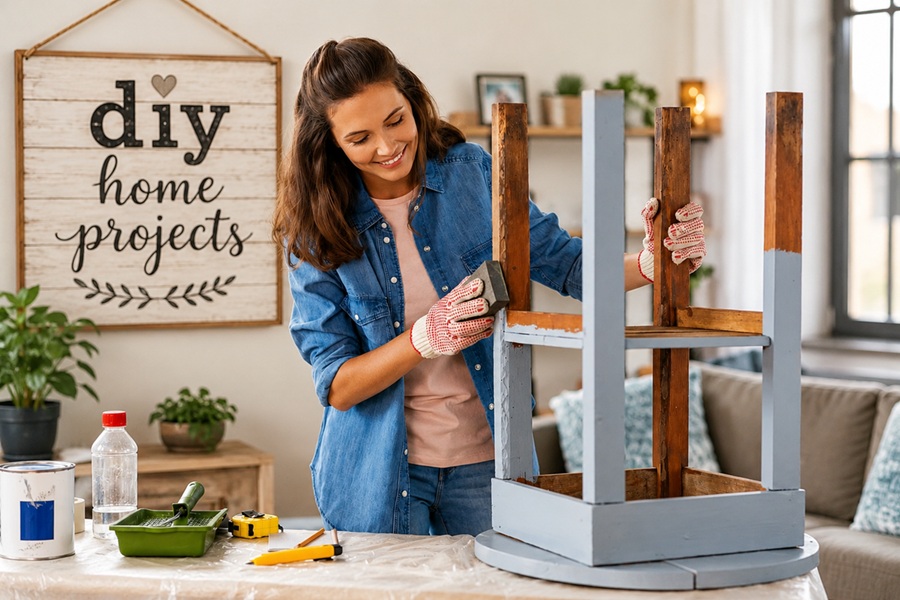
DIY home projects are do-it-yourself improvements you make to your own home, ranging from quick, beginner-friendly tasks like painting a room, updating hardware, or building simple shelves, to larger upgrades that add real value and personal style. The appeal is clear: doing it yourself saves money on labor, lets you customize your space exactly how you want, and brings the satisfaction of creating something with your own hands. The key to success is starting with projects that match your skill level, using the right tools, and prioritizing safety, so you build confidence and results at the same time.
There has never been a better time to tackle home projects yourself, with endless inspiration and know-how available and a huge range of projects suited to every skill level and budget. Whether you want to refresh your decor, get more organized, or take on a bigger upgrade, DIY lets you shape your home on your own terms. This guide covers the benefits, popular project ideas from easy to ambitious, essential tips for beginners, and how to get started safely.
| What they are | Do-it-yourself improvements to your home |
| Range | From quick tasks to bigger upgrades |
| Easy starters | Painting, hardware, simple shelving |
| Main benefits | Save money, customize, and enjoy the satisfaction |
| Key to success | Match projects to your skill level |
| Essentials | The right tools and a focus on safety |
| Great for | Decor, organization, repairs, and upgrades |
| Best approach | Start small and build confidence |
Why Do It Yourself
The reasons people take on DIY home projects go beyond just the work itself. The most obvious benefit is saving money, since doing a project yourself eliminates labor costs, which are often a large part of home improvement expenses. For budget-conscious homeowners, DIY makes improvements affordable that might otherwise be out of reach.
But money is only part of it. DIY lets you customize your home exactly to your taste, creating personalized results rather than settling for off-the-shelf solutions. There is also genuine satisfaction and pride in completing a project with your own hands, along with the skills and confidence you gain along the way. Many people find DIY a rewarding, even relaxing, creative outlet, which is a big part of its enduring popularity.
Easy Projects for Beginners
If you are new to DIY, starting with simple, high-impact projects builds confidence and skills without much risk. These beginner-friendly projects deliver satisfying results and are hard to get badly wrong.
- Painting a room or an accent wall for a dramatic, affordable refresh
- Updating cabinet hardware, knobs, and pulls for an instant facelift
- Building or installing simple shelves for storage and display
- Refreshing furniture with paint or new finishes
- Adding peel-and-stick or other easy decorative updates
- Simple organization projects like closet or garage systems
Popular Project Categories
DIY home projects fall into a few broad categories, and thinking in terms of these helps you decide what to tackle based on your goals. Each offers projects across the difficulty range.
| Category | Example Projects | Goal |
| Decor and style | Painting, art, accent updates | Refresh the look |
| Organization | Shelving, closets, storage | Reduce clutter |
| Small repairs | Fixing, patching, sealing | Maintain the home |
| Upgrades | Fixtures, backsplashes, trim | Add value and function |
| Outdoor | Gardens, patios, simple builds | Improve outdoor living |
Taking On Bigger Projects
As your skills and confidence grow, you can move on to more ambitious projects that make a bigger impact. Intermediate and advanced DIY might include installing a tile backsplash, updating light fixtures, laying certain types of flooring, building custom furniture, or tackling larger outdoor builds. These take more planning, tools, and skill, but they deliver impressive results and real value. The key is to be honest about your abilities and to work up to bigger projects gradually rather than jumping in over your head. Researching thoroughly, planning carefully, and knowing when a job exceeds your skills are what keep ambitious DIY successful and safe.
Essential Tips for Success
A few principles make the difference between DIY projects that go smoothly and ones that end in frustration. Keeping these in mind sets you up for good results.
- Start with projects that match your current skill level and build up
- Plan and research thoroughly before you begin
- Invest in the right tools, which make the job easier and better
- Measure carefully and take your time rather than rushing
- Prepare properly, since good prep is often most of a quality result
- Know your limits and call a professional for jobs beyond your skills
How do I plan a DIY project?
Define what you want to accomplish, research how to do it, list and gather all materials and tools before starting, and set a realistic budget and timeline. Prepare your workspace, measure carefully, and build in extra time for surprises.
Are DIY home projects worth it?
For many people, yes. They save on labor costs, let you customize your home, and bring real satisfaction and useful skills. The key is matching projects to your ability and knowing when a job is better left to a professional.
Safety First
Safety is essential in any DIY project, and it should never be an afterthought. Wear appropriate protective gear like safety glasses and gloves, use tools correctly and according to their instructions, and work in a safe, well-lit space. Be especially cautious with projects involving electricity, gas, structural changes, or heights, since these carry real risks and are often best left to licensed professionals. Turning off power before electrical work and following proper procedures matters enormously. Knowing which projects are safe to DIY and which require a professional is not a limitation but a smart part of being a good do-it-yourselfer, protecting both you and your home.
Frequently Asked Questions
What are good DIY projects for beginners?
Great starters include painting a room, updating cabinet hardware, building simple shelves, refreshing furniture, and easy organization projects. These are high-impact, low-risk, and build confidence and skills for bigger projects later.
Do DIY home projects really save money?
Yes, mainly by eliminating labor costs, which are often a large part of home improvement expenses. You still pay for materials and tools, but doing the work yourself can make improvements far more affordable than hiring out.
When should I hire a professional instead of DIY?
Call a professional for projects involving electricity, gas, structural changes, or significant safety risks, or any job beyond your skill level. Knowing your limits keeps you and your home safe and is part of being a smart do-it-yourselfer.
What tools do I need to start DIY?
A basic kit covers most beginner projects: a drill, screwdrivers, a hammer, a tape measure, a level, and safety gear. Add tools as specific projects require them, investing in quality where you will use them often.
Planning a DIY Project From Start to Finish
A little planning is what separates a smooth, satisfying DIY project from a frustrating one, so it is worth thinking through the whole job before you pick up a tool. Good planning helps you avoid mid-project surprises, wasted materials, and half-finished work, and it keeps costs and time under control.
Start by defining exactly what you want to accomplish and researching how to do it, watching or reading guides for your specific project. Make a list of the materials and tools you will need and gather everything before you begin, so you are not stopping halfway to buy a missing part. Measure carefully and, where relevant, plan your layout or design on paper first.
- Define the project clearly and research how to do it
- Make a complete list of materials and tools
- Set a realistic budget and timeline
- Gather everything and prepare your workspace
- Take your time, measure carefully, and follow each step
- Clean up and enjoy the finished result
Building in a little extra time and budget for the unexpected is wise, since projects often reveal surprises once you start. Working methodically through these steps, rather than rushing in, gives you better results and a far more enjoyable experience, which is exactly what makes DIY rewarding rather than stressful.
Final Thoughts
DIY home projects are a rewarding way to improve your home while saving money, expressing your style, and building skills you will use for years. Start with easy, high-impact projects to gain confidence, then work up to bigger upgrades as your abilities grow. Plan carefully, use the right tools, and always prioritize safety, calling in a professional for jobs that involve electricity, gas, structure, or serious risk. With the right approach, DIY turns your home into a project you can be proud of, one satisfying improvement at a time.
