
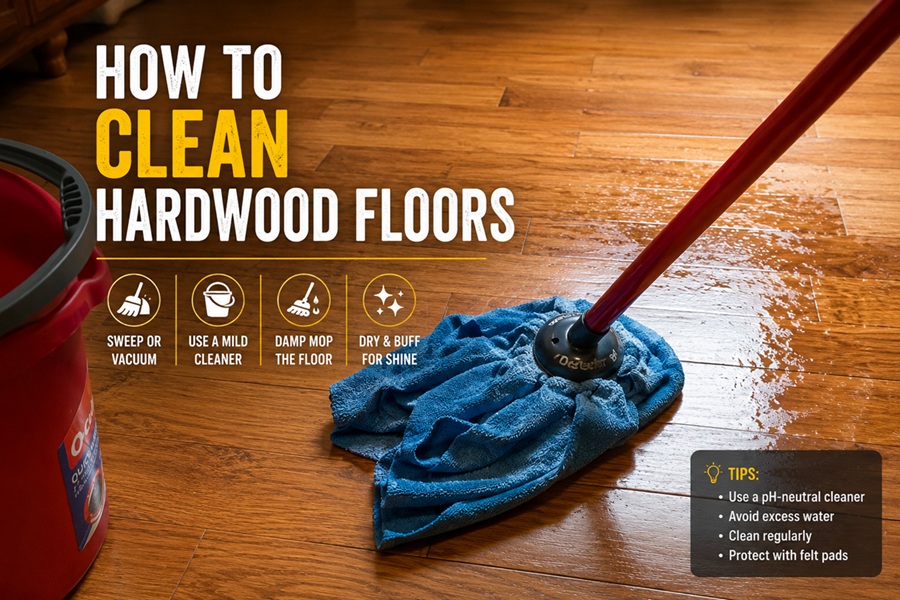
To clean hardwood floors safely, sweep, dust, or vacuum regularly to remove the grit that scratches the finish, then damp mop, never wet, with a cleaner made for hardwood, wiping up spills promptly and avoiding excess water. The single most important rule is to keep water to a minimum, because standing water and soaking are hardwood’s worst enemies, seeping into seams and damaging both the finish and the wood. With gentle, consistent care and the right products, hardwood floors stay beautiful for decades, and the routine is simpler than many people think.
Hardwood floors are a valuable, long-lasting feature, but they need the right cleaning approach to protect their finish and the wood beneath. The good news is that proper hardwood cleaning is easy and low-effort once you know the basics: what to do daily, how to mop correctly, what to use, and just as importantly, what to avoid. This guide walks through it all so you can keep your floors gleaming without risking damage.
| Golden rule | Keep water to a minimum, never soak |
| Daily | Sweep, dust, or vacuum to remove grit |
| Regular | Damp mop with a hardwood cleaner |
| Spills | Wipe up promptly to protect the wood |
| Use | A cleaner made for hardwood floors |
| Avoid | Excess water, steam, and harsh cleaners |
| Protect | Felt pads, entry mats, and no grit |
| Result | Beautiful floors that last for decades |
Start With Regular Dusting
The foundation of hardwood care is removing dirt and grit frequently, because those tiny particles act like sandpaper underfoot, scratching and dulling the finish over time. Regular dry cleaning is the most important habit for keeping floors looking good. Sweep with a soft broom, use a dust mop, or vacuum with a hardwood-safe setting to lift dust, hair, and grit before it can do damage.
How often depends on traffic, but high-use areas benefit from daily or near-daily attention, while quieter rooms need it less. The key is consistency: staying ahead of the grit protects the finish far more than any occasional deep clean. If you vacuum, make sure to use a mode without an aggressive rotating brush that could scratch, or with the brush disengaged.
How to Damp Mop Correctly
Beyond dusting, hardwood floors need periodic damp mopping to remove the film and grime that dry cleaning leaves behind. The crucial word is damp, not wet, since too much water is what damages hardwood. Done right, mopping is safe and effective.
- Sweep or vacuum first so you are not pushing grit around while mopping.
- Use a cleaner formulated for hardwood floors, following its directions.
- Dampen a mop or microfiber pad and wring it out well so it is barely wet, not dripping.
- Mop in the direction of the wood grain, working in sections.
- Rinse or refresh the mop as it picks up dirt, keeping it just damp.
- The floor should dry quickly; if it stays wet, you used too much water.
Choosing the Right Cleaner
The safest choice is a cleaner made specifically for hardwood floors, since these are formulated to clean without harming the finish. Plain water used sparingly can work for light cleaning, but a dedicated hardwood cleaner handles grime better while protecting the wood. Avoid all-purpose cleaners that may be too harsh, and steer clear of anything abrasive. There is also debate about home remedies like vinegar; because its acidity can dull some finishes over time, it is safest to stick with a product designed for hardwood rather than risk your floor’s finish.
What to Avoid
Knowing what not to do protects your floors as much as knowing what to do. Several common mistakes can damage hardwood, sometimes permanently, so avoid these.
- Excess water or wet mopping, which seeps into seams and damages wood
- Steam mops, whose heat and moisture can harm hardwood finishes
- Harsh, abrasive, or all-purpose cleaners not meant for wood
- Letting spills sit, which can stain or warp the wood
- Vacuuming with an aggressive beater bar that scratches the finish
- Wax or oil products on a floor whose finish does not call for them
Handling Spills and Stains
Spills are inevitable, and how quickly you respond matters. Because standing liquid is so damaging to wood, wipe up any spill promptly with a soft, slightly damp or dry cloth, then dry the area. The faster you act, the less chance the liquid has to seep into seams or under the finish and cause staining or warping. For sticky spots, a little hardwood cleaner on a cloth usually does the job. The habit of dealing with spills immediately, rather than leaving them, is one of the simplest ways to keep hardwood floors in top condition.
Protecting Your Floors
The best cleaning routine is paired with prevention that keeps dirt and damage off the floor in the first place. Place mats at entrances to catch grit and moisture before it reaches the wood, and consider a no-shoes policy in high-traffic homes. Use felt pads under furniture legs to prevent scratches, and lift rather than drag heavy items. Area rugs in busy zones protect the finish, and keeping pets’ nails trimmed reduces scratching. These small protective habits dramatically reduce wear, so your regular cleaning keeps the floors looking new for far longer.
Frequently Asked Questions
How often should I clean hardwood floors?
Sweep, dust, or vacuum regularly, often daily in high-traffic areas, to remove grit, and damp mop periodically as needed. Frequent dry cleaning matters most, since removing grit protects the finish more than an occasional deep clean.
Can I use vinegar to clean hardwood floors?
It is safest to avoid it. Vinegar’s acidity can dull some hardwood finishes over time, so a cleaner made specifically for hardwood is the safer choice for protecting your floor while cleaning it effectively.
Is it safe to use a steam mop on hardwood?
Generally no. The heat and moisture of a steam mop can damage hardwood finishes and the wood, so it is best avoided. Stick to a well-wrung damp mop with a hardwood cleaner instead.
Why should I avoid too much water on hardwood?
Because water is hardwood’s worst enemy. Excess water and standing liquid seep into seams and under the finish, causing staining, warping, and lasting damage. Always mop damp, not wet, and wipe up spills promptly.
What is the best way to mop hardwood floors?
Sweep or vacuum first, then use a well-wrung damp mop, barely wet, with a hardwood cleaner, working in the direction of the grain. The floor should dry quickly; if it stays wet, you used too much water.
How do I make hardwood floors shine?
Keep them free of grit and grime with regular dusting and damp mopping using a hardwood cleaner, which restores natural luster. Avoid wax or oil unless your finish calls for it, and have floors professionally recoated when the shine fades over the years.
A Simple Weekly and Monthly Routine
Turning hardwood care into an easy routine keeps floors looking their best without much thought. Breaking it into daily, weekly, and occasional tasks makes the whole thing manageable and ensures nothing important gets skipped.
On a daily or near-daily basis in busy areas, a quick sweep or dust-mop removes the grit that does the most damage. Weekly, give high-traffic rooms a more thorough dry clean and a damp mop with hardwood cleaner where needed, focusing on kitchens, entryways, and hallways that collect the most dirt. Less-used rooms need this less often, so adjust to how each space is actually used.
Every so often, do a slightly deeper clean, checking for spots that need attention, refreshing entry mats, and inspecting for any scratches or worn finish. Over the long term, floors with the right finish can eventually be refreshed or recoated by a professional to restore their luster. This layered routine, quick daily upkeep, weekly cleaning, and occasional deeper care, keeps hardwood beautiful with minimal effort.
- Daily: quick sweep or dust-mop in busy areas
- Weekly: thorough dry clean and damp mop as needed
- Focus on kitchens, entryways, and hallways
- Occasionally: deeper clean and check for wear
- Long term: professional refresh or recoat when needed
Final Thoughts
Cleaning hardwood floors well comes down to a simple routine and one golden rule: keep water to a minimum. Dust or vacuum regularly to remove the grit that scratches, damp mop, never wet, with a proper hardwood cleaner, and wipe up spills right away. Avoid steam, harsh cleaners, and excess water, and protect the floors with mats and felt pads. Follow these easy habits consistently and your hardwood floors will stay beautiful, gleaming, and damage-free for decades, all with surprisingly little effort.
