
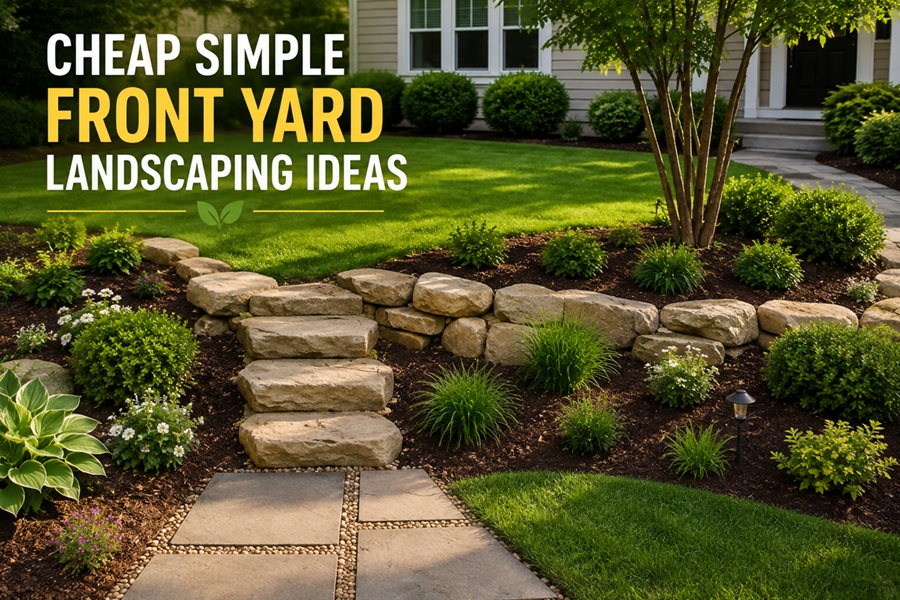
Cheap, simple front yard landscaping usually means working with a handful of low-maintenance plants, mulch or gravel instead of expensive hardscaping, and a clean, uncluttered layout rather than a yard packed with features. The goal is curb appeal without a big price tag, and most of that comes down to smart plant choices and a layout that looks intentional even with a small budget.
A front yard doesn’t need a full redesign to look better. Small, low-cost changes — trimmed edges, a fresh layer of mulch, a few well-placed plants — often do more for curb appeal than an expensive overhaul. The trick is knowing which upgrades give the most visual payoff for the least money.
Quick-Look: Budget Landscaping Ideas
| Idea | Estimated Cost | Effort Level |
|---|---|---|
| Fresh mulch beds | $30–$100 | Low |
| Edging with stone or plastic border | $20–$80 | Low |
| Native or perennial plant swap | $50–$150 | Medium |
| Gravel pathway | $75–$200 | Medium |
| Repainted or refreshed planters | $10–$40 | Low |
| Simple lawn edging and trimming | Free–$30 | Low |
None of these require a professional crew. Most can be done in a weekend, spread across a few smaller sessions if time is limited.
Why Front Yard Landscaping Doesn’t Need to Be Expensive
A lot of the cost in professional landscaping comes from labor, custom hardscaping, and mature plants bought at full size. Skipping those three things alone can cut a project’s cost dramatically.
- Buying smaller plants and letting them grow in saves significant money over mature specimens
- Doing the digging and planting yourself removes the biggest line item — labor
- Simple materials like mulch and gravel cost far less than pavers or poured concrete
- A clean, minimal layout often looks better than a crowded one, and costs less too
The most expensive-looking yards aren’t always the most expensive to create — they’re usually just the most intentional.
Low-Cost Plant Choices for a Budget Front Yard
Picking the right plants matters more than picking a lot of them. A few well-placed, low-maintenance plants usually beat a yard packed with variety.
| Plant Type | Why It’s Budget-Friendly | Maintenance |
|---|---|---|
| Native perennials | Adapted to local climate, less watering | Low |
| Ornamental grasses | Spread and fill space over time | Low |
| Groundcover (creeping thyme, sedum) | Cheap to buy in small quantities, spreads | Low |
| Shrubs bought small | Cheaper than mature shrubs, grow into shape | Medium |
| Annual flowers for color | Inexpensive per season, high visual payoff | Medium |
Native plants are worth prioritizing where possible. They’re bred by nature to survive local weather without much extra watering or fertilizer, which saves money well beyond the initial purchase.
Mulch, Rock, or Ground Cover: Which Is Cheapest
Bare dirt beds look unfinished and invite weeds. Covering them is one of the highest-impact, lowest-cost upgrades available.
| Material | Cost Range | Upkeep | Best For |
|---|---|---|---|
| Wood mulch | $30–$100 per area | Reapply yearly | Flower beds, tree rings |
| Gravel/rock | $75–$200 per area | Very low, lasts years | Paths, low-traffic beds |
| Groundcover plants | $50–$150 | Grows in over time | Slopes, borders |
| Straw mulch | $20–$50 | Reapply often | Temporary or vegetable areas |
Mulch is usually the cheapest starting point and gives an immediate visual upgrade. Gravel costs more upfront but doesn’t need yearly reapplication, which can make it cheaper over several years.
Simple DIY Walkways and Edging
A defined path or border makes a yard look designed rather than just planted. This doesn’t require poured concrete or hired labor.
- Stepping stone paths — buy pavers individually and space them yourself
- Gravel walkways — lay landscape fabric first, then a few inches of gravel
- Plastic or metal edging — cheap, easy to install, keeps mulch contained
- Brick borders — often available secondhand or from salvage yards
- Rope or log edging — a rustic, low-cost option for casual yards
Edging alone — even without a full path — makes flower beds look noticeably more finished for very little money.
Using What You Already Have
Before buying anything new, it’s worth taking stock of what’s already in the yard.
- Divide overgrown perennials and replant them elsewhere in the yard
- Reuse pavers, bricks, or stones from an unrelated project
- Move existing shrubs to better spots instead of removing them
- Repurpose containers — old buckets, crates, or barrels — as planters
- Trim and shape existing hedges instead of replacing them
Dividing plants is one of the most overlooked free upgrades. Many perennials, like hostas or daylilies, can be split every few years and replanted at no cost.
Layout Tips That Make a Small Budget Look Bigger
Plant choice and materials matter, but layout is what ties everything together.
- Keep bed shapes simple — curves and rectangles read as intentional, scattered shapes read as messy
- Group plants in odd numbers (three or five) rather than single scattered specimens
- Repeat one or two plant types across the yard instead of using many different ones
- Leave open lawn space rather than filling every inch with beds
- Frame the front door or walkway, since that’s the area guests notice first
A yard with three plant varieties arranged cleanly usually looks more polished than one with ten varieties scattered randomly.
Timing Purchases to Save Money
When you buy can matter almost as much as what you buy.
| Timing | Why It Saves Money |
|---|---|
| End-of-season plant sales | Nurseries discount stock before it changes |
| Early spring bare-root plants | Cheaper than potted, established plants |
| Off-season mulch delivery | Some suppliers discount outside peak spring demand |
| Community plant swaps | Free plants from neighbors dividing their own |
| Big-box store clearance racks | Discounted plants that just need a little care |
Clearance plants often look rough on the shelf but recover quickly once they’re in the ground and getting regular water.
Common Mistakes That Waste Money
- Buying full-size, mature plants instead of smaller ones that grow in
- Overplanting a bed, leading to overcrowding and plant loss
- Skipping soil prep, which shortens the lifespan of new plants
- Choosing plants not suited to the yard’s sun or shade conditions
- Replacing mulch every year instead of choosing a longer-lasting material
Skipping soil prep is one of the most common budget mistakes — a plant placed in poor soil often dies and needs replacing, which costs more in the long run than doing it right the first time.
Sample Budget Plan for a Small Front Yard
| Item | Estimated Cost |
|---|---|
| Mulch for two beds | $60 |
| Five small perennials | $75 |
| Plastic edging (30 ft) | $40 |
| Gravel for a short path | $90 |
| Two repurposed planters | $20 |
| Total | ~$285 |
This kind of budget can noticeably change how a front yard looks without touching hardscaping, lighting, or structural changes.
Frequently Asked Questions
What’s the cheapest way to improve front yard landscaping?
Fresh mulch and clean edging around existing beds usually give the biggest visual improvement for the least money, often under $100.
What plants are cheapest for a front yard?
Native perennials, ornamental grasses, and groundcover plants tend to cost less upfront and require less water and fertilizer over time.
Is gravel or mulch cheaper for landscaping?
Mulch is usually cheaper upfront, but gravel lasts longer without needing yearly reapplication, which can make it more cost-effective over several years.
Can I landscape a front yard myself without hiring anyone?
Yes. Most budget landscaping projects — mulching, planting, edging, simple paths — are manageable as a DIY weekend project without professional help.
How can I make a small landscaping budget look more expensive?
Keep the plant palette simple, repeat a few plant types instead of many, and prioritize clean edges and defined bed shapes over cramming in more plants.
Final Thoughts
A great-looking front yard doesn’t require a big budget — it requires a few smart choices made consistently. Fresh mulch, a handful of low-maintenance plants, and clean edges will do more for curb appeal than an expensive but cluttered redesign. Start with the cheapest, highest-impact changes first, and expand from there as time and budget allow.
